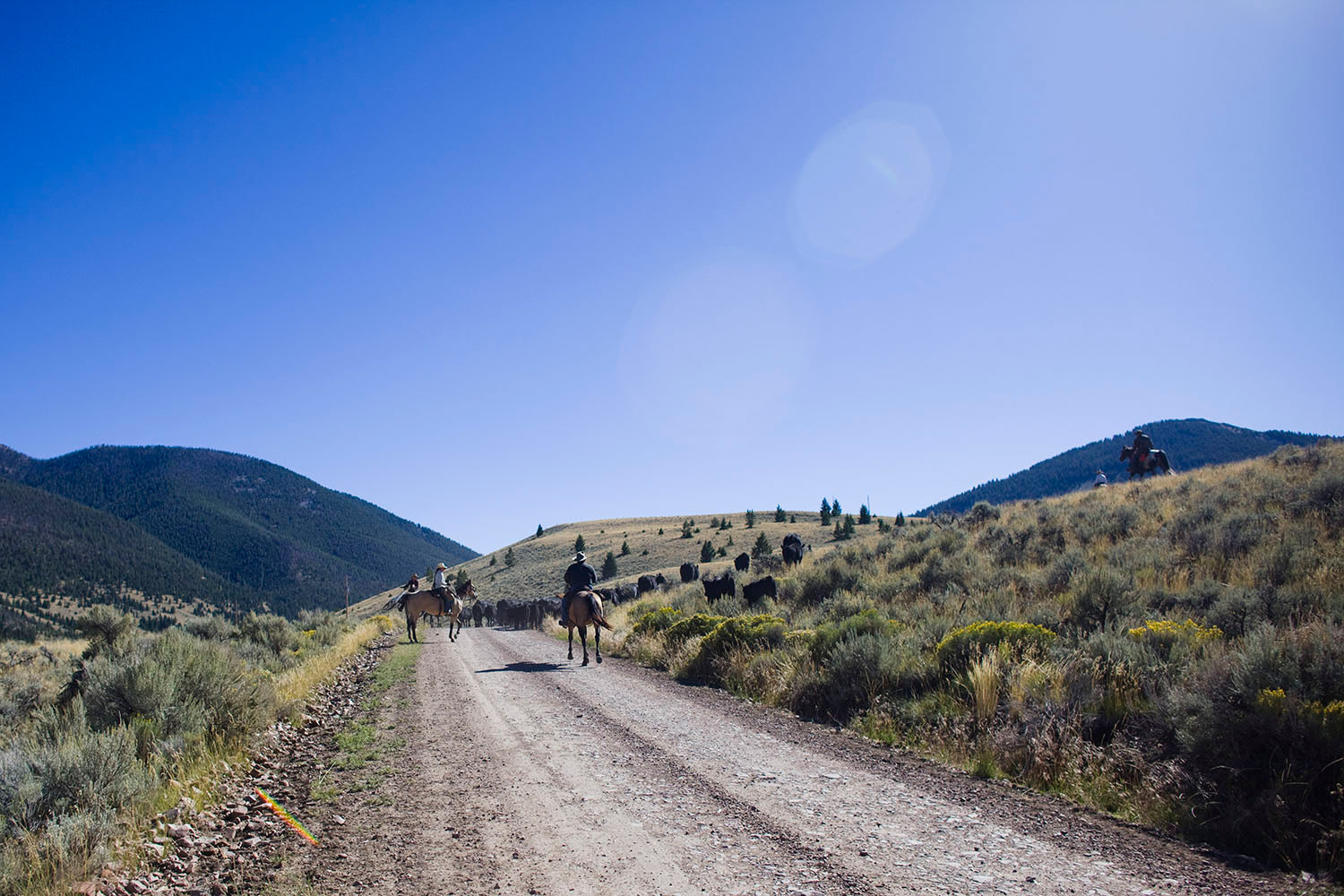
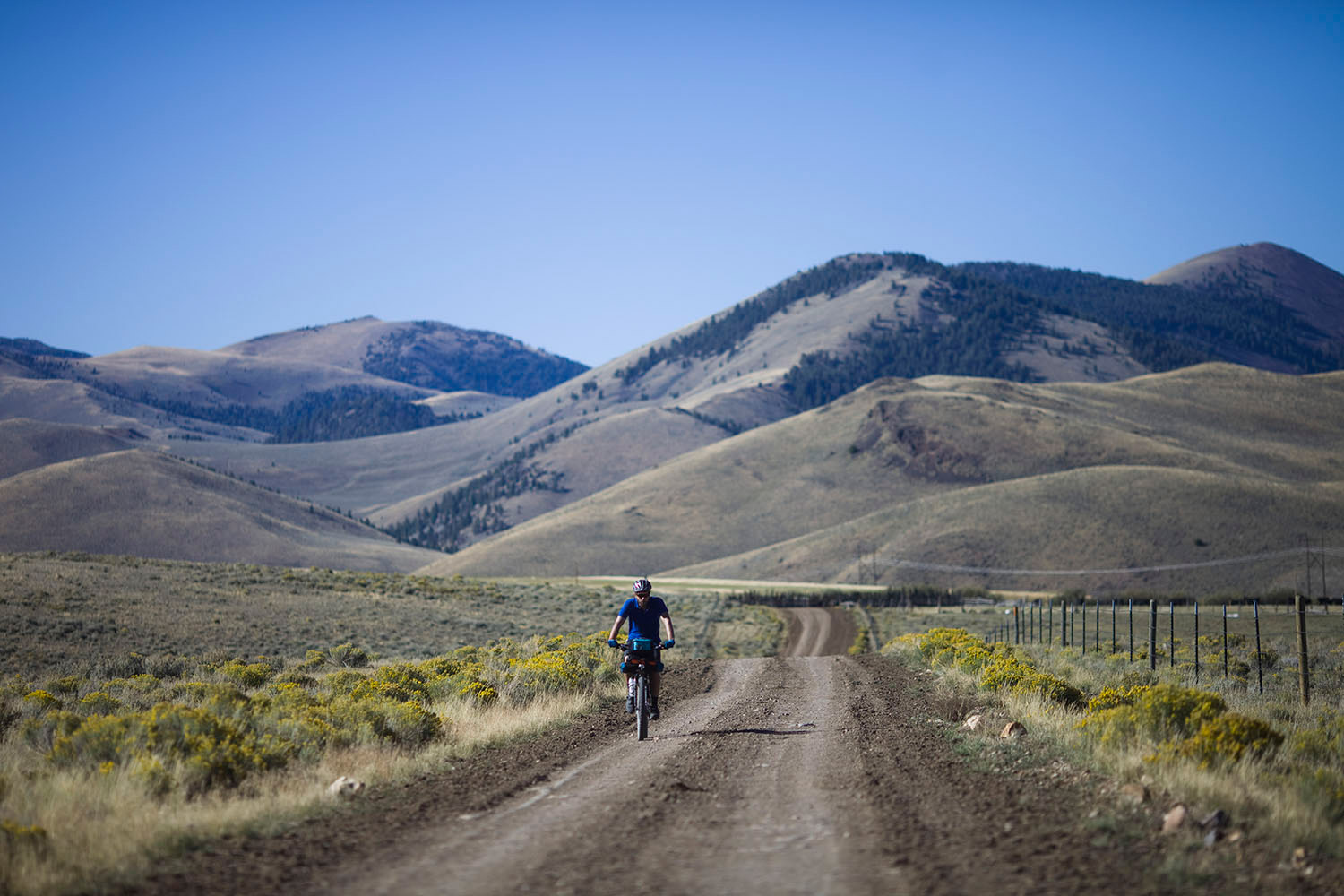
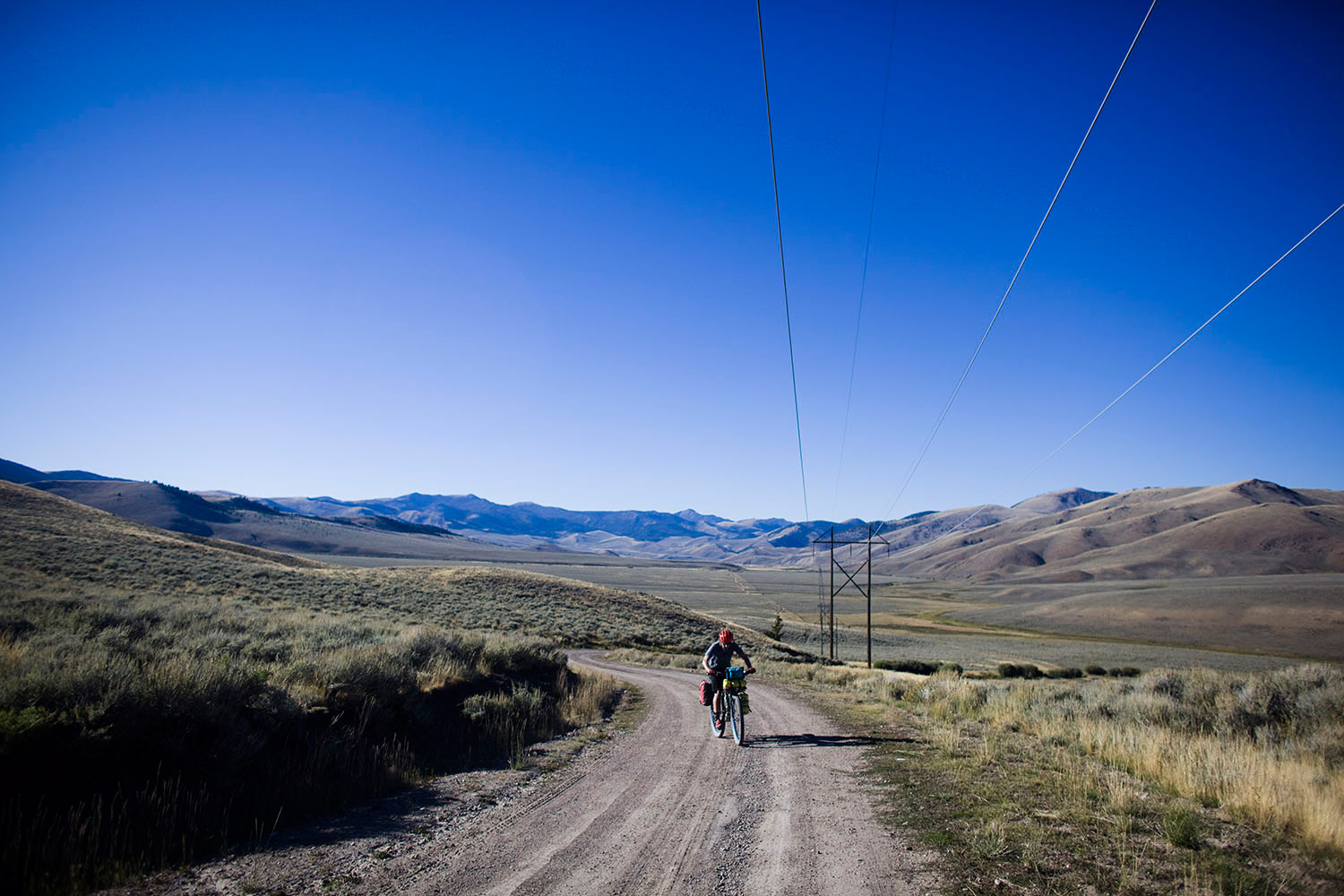
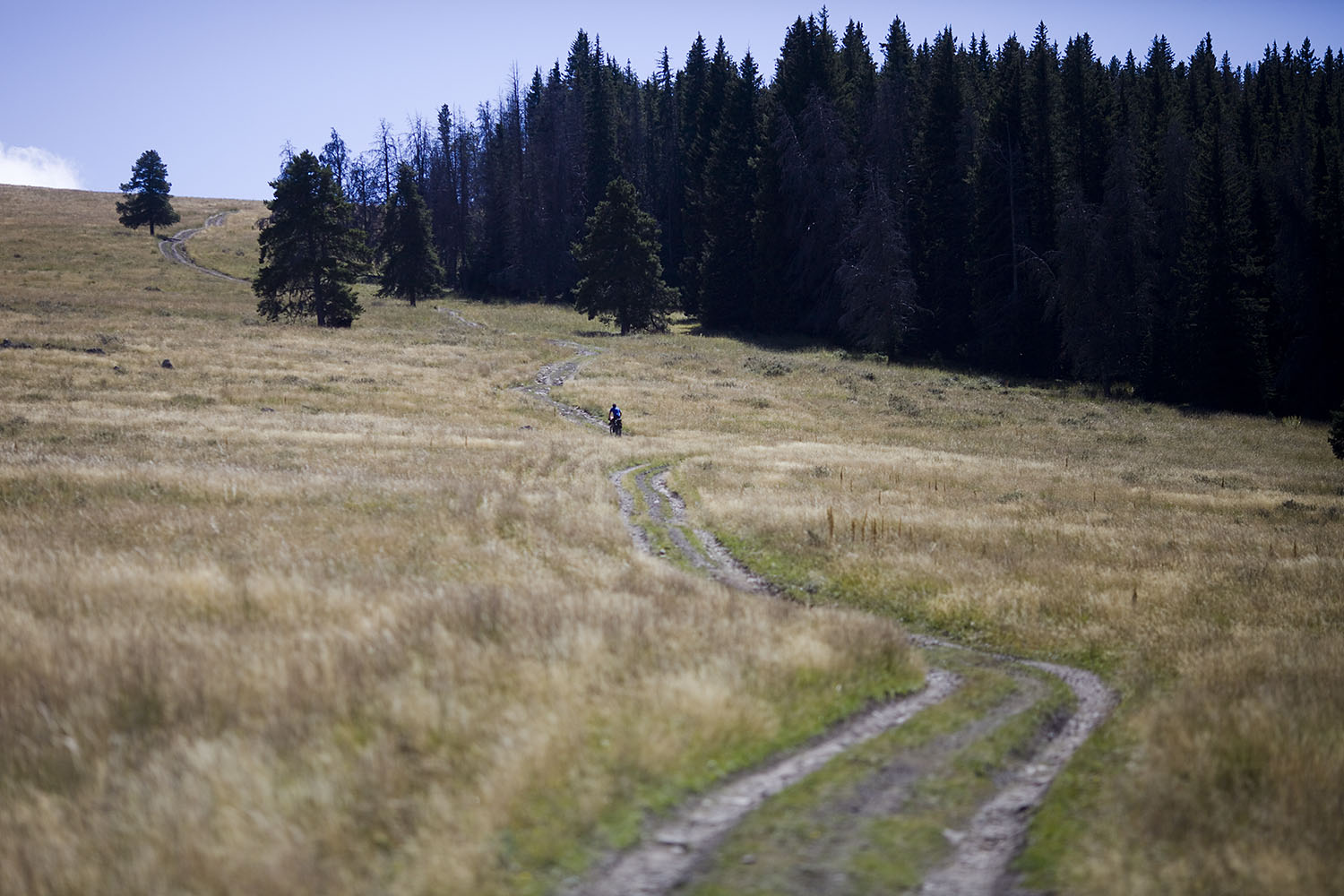
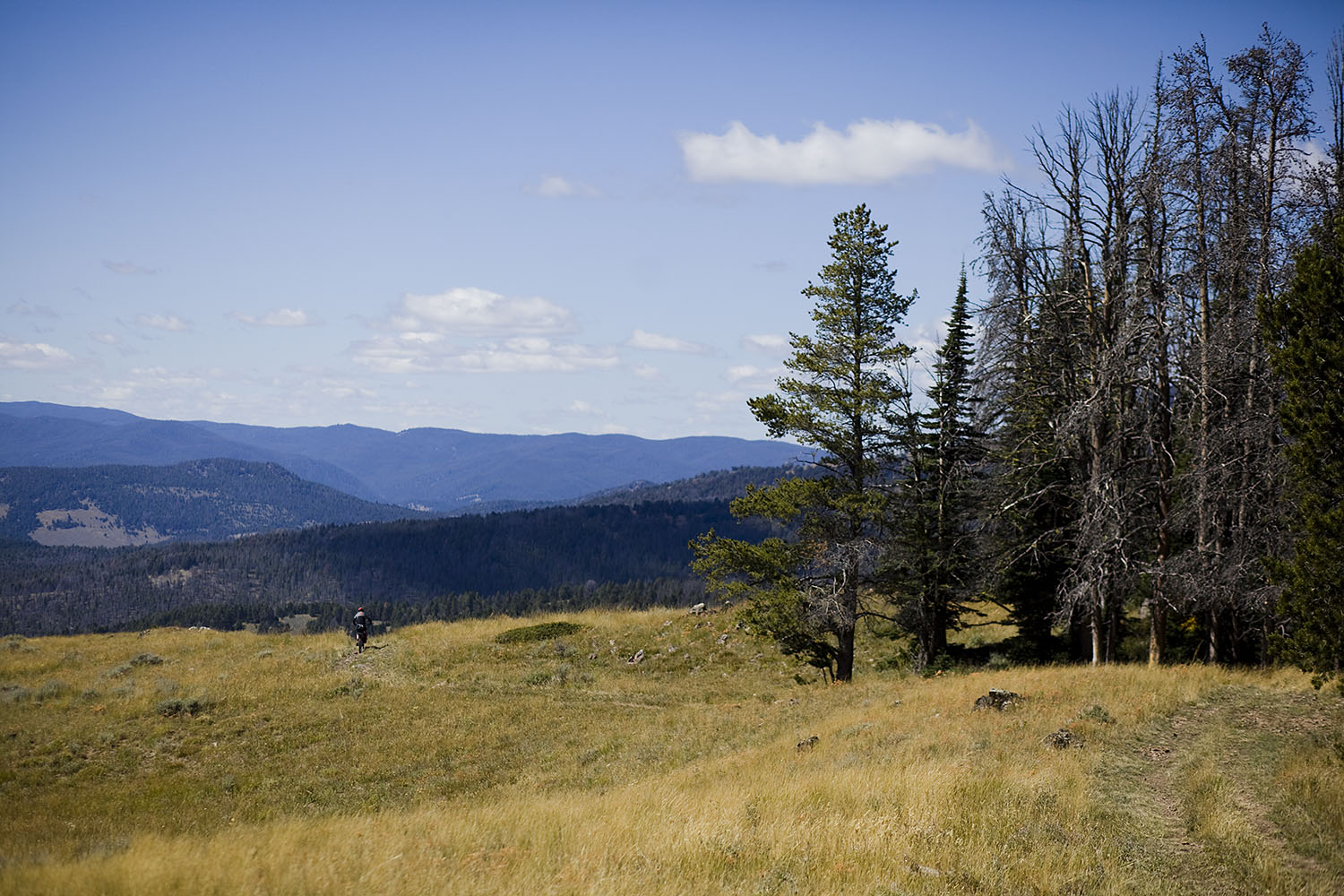
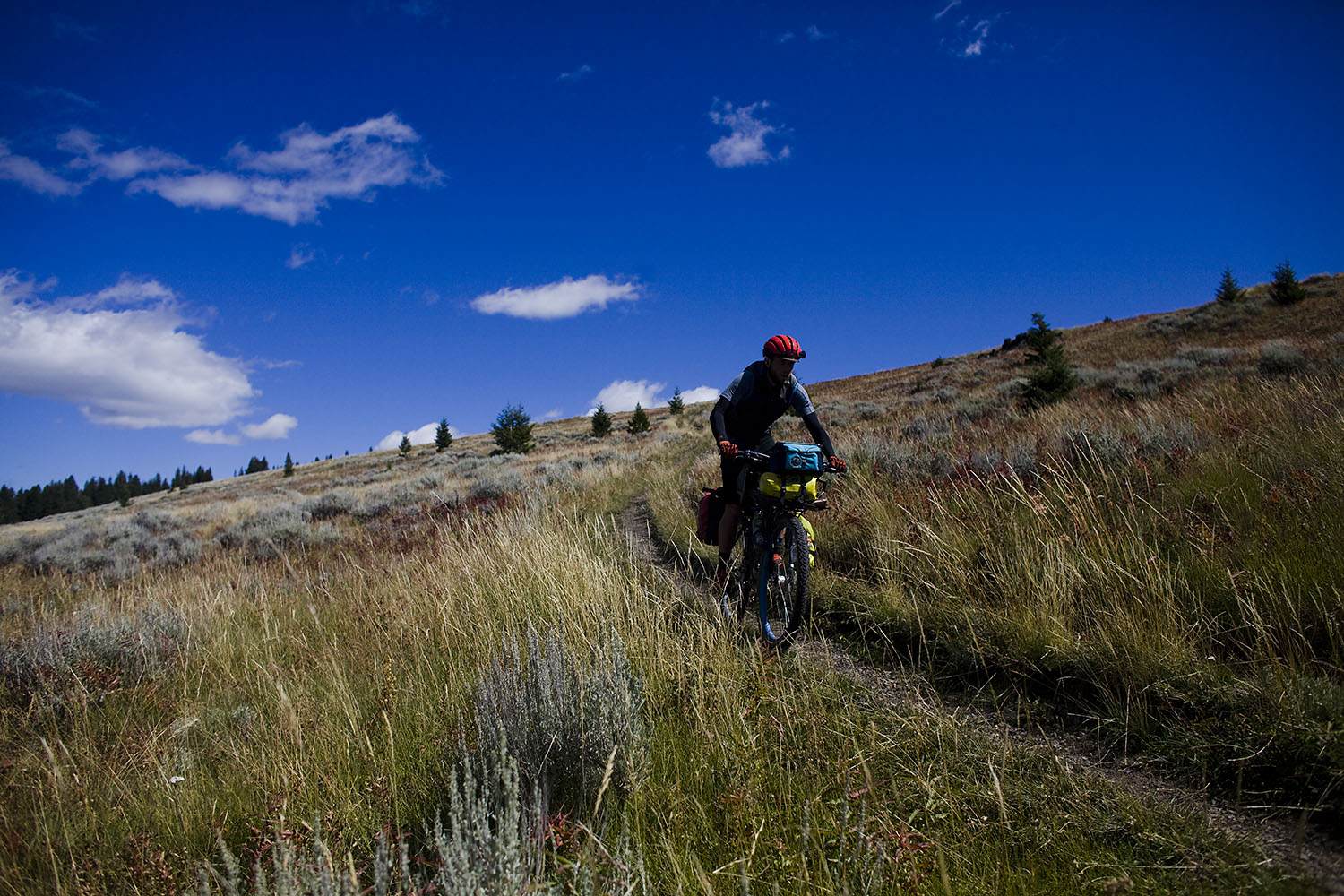
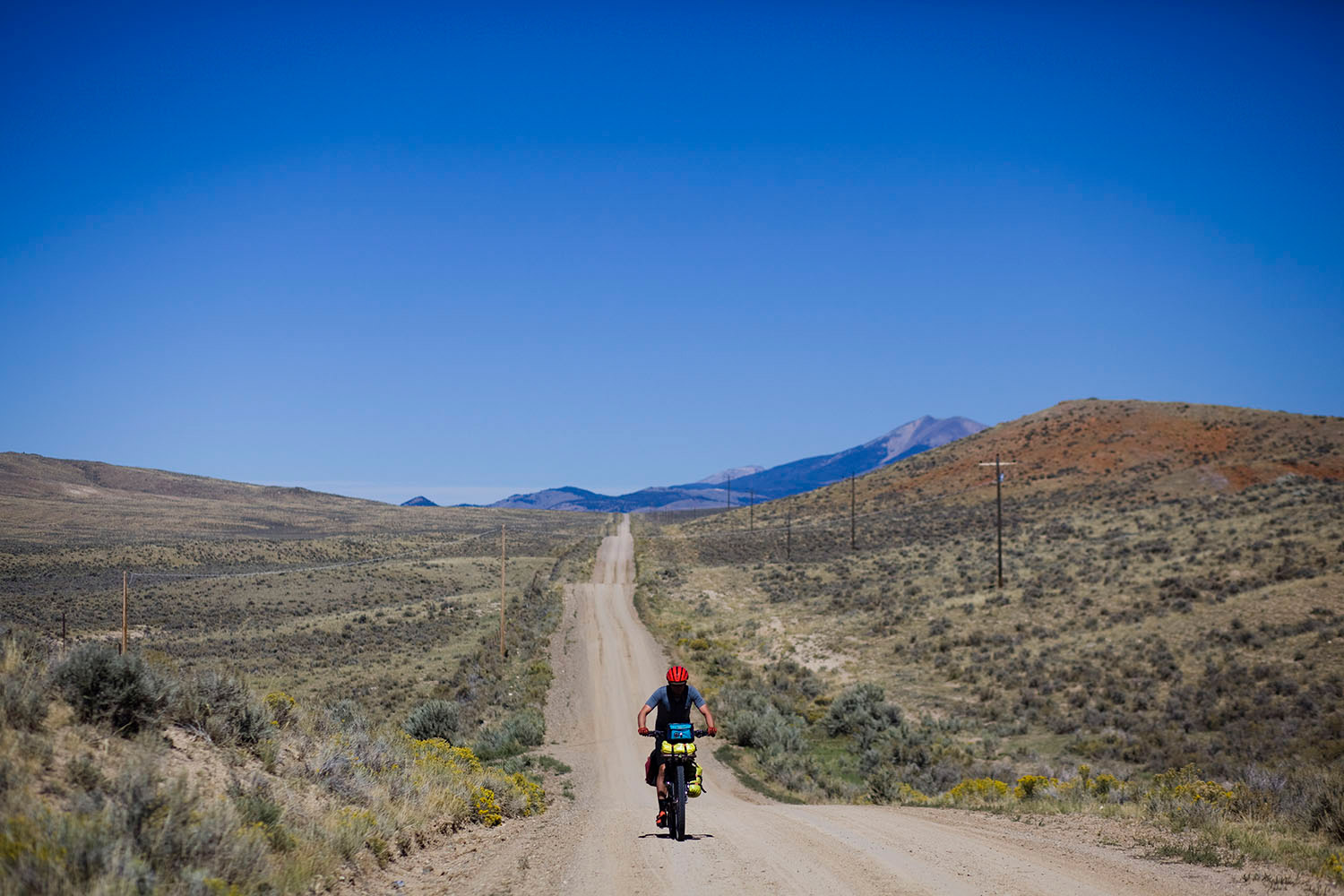
After a good nights rest, we powered up in the morning with a hot breakfast of oats, nutella, and pb. We probably threw pop-tarts in the mix for good measure since we knew today was going to be a long one. We set off, continuing down the second half of the descent we had started the night before. It was fast and fun. After bottoming out, and sending off a package at the post office in Polaris, MT, we continued on paved roads. About 40 miles in, we turned onto a gravel road, The Big Sheep Creek Back Country Byway, where we almost immediately encountered a headwind. The road was decent, but it was a slog, slowly leading us through remote wilderness where we gained elevation for the next 25 miles. It didn’t help that this was the first hot day of the trip and there was no shade to be found. We pushed on, cursing the headwind and finally, after a short steep climb, we crested the Medicine Lodge – Big Sheep Creek Divide. We stopped for lunch and after talking to a hunter, began the descent. Having said some pretty awful things about the wind all day, we were forced to eat crow (in the best way possible) as the wind shifted and became a tailwind. We were now cruising, averaging well over 20mph for the next hour or so. The road followed down a narrow canyon with epic rock outcroppings. As the sun began to set, we could see the lights of Lima in the distance. We took a right turn onto a dirt frontage road and right into a slight headwind. The next hour was a slow grind and we eventually entered into town, found a cafe just before close, and chowed on delicious Bacon Cheeseburgers. We then rolled across the street and set up camp behind a motel. Sleep came pretty easy that night.
Tag: gear
-
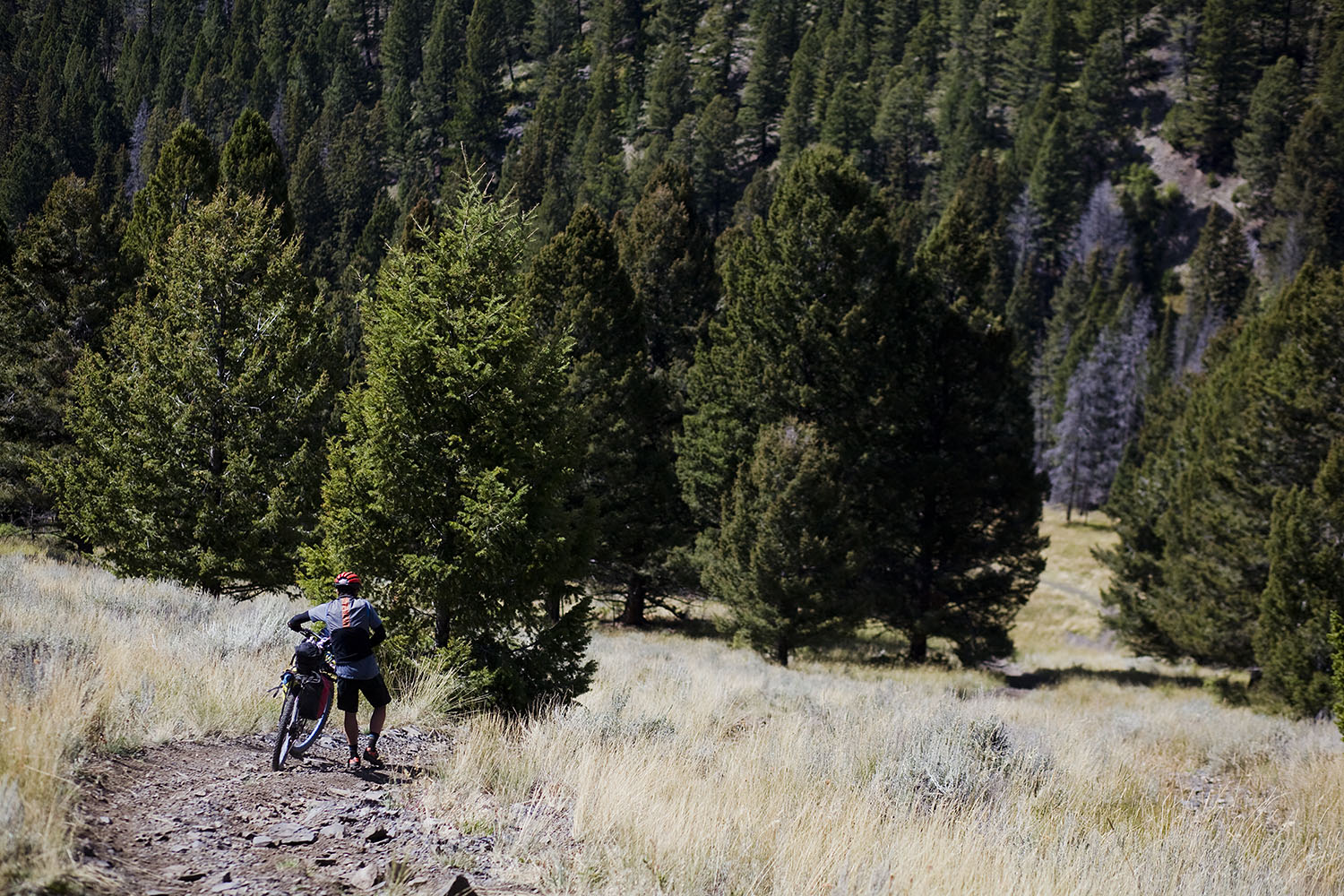
As we packed our camp, Brett began to fill his water when a fellow camper warned us that the water was no good. He proceeded to fill both of our water bladders with fresh water from his supply and then his wife gave us each a stick of homemade elk salami. Needless to say we set off in good spirits, even though the ominous Fleecer Ridge was only a few miles away. We continued the same climb as we started last night and 6 miles later we arrived. Fleecer is a short but incredibly steep section of rough jeep track that averages nearly 20% grade. We made it to the top, legs burning, and navigated atop a ridge to the descent, which was much steeper, a little longer, and for the most part, completely unrideable with our fully loaded bikes. Finally, after a steep hike-a-bike, we made it to the bottom. Back on our bikes, we cruised the rest of the descent and turned onto a highway. After a short stop and some road beers from kind strangers, we continued on pavement into a headwind and up a road that just kept climbing. We had hopes to travel farther, but the light was fading halfway down a pretty glorious descent. We found ourselves a nice place to call it a day at Grasshopper Campground.
-
For this trip, we put a lot of thought into our gear. Taking into account the lack of resources available along the route, we needed our equipment to be bullet proof, lightweight, and if possible, serve more than one duty. This is what led us to the Solo Stove.
The Solo Stove is a compact, wood burning stove. We knew that this would be a good choice for our ride as we would be camping in forests throughout the entire route, where sticks and twigs we would be plentiful. Since we could pull up to any camp and quickly find enough sticks to cook with, we were able to forgo packing fuel canisters, saving precious space and weight. The stove itself was very easy to use, and we quickly discovered a few techniques to help get the fire started in various conditions. In good conditions a small piece of toilet paper, balled up and placed at the bottom, was all that was needed to get smalls sticks going. When it was raining or wet, we would use solid fuel cubes to help aid this process. We also traveled with a small bag of dry twigs just in case.

Another great feature was that it came with a .9 L cook pot, which doubled as our eating vessels. The two pieces nest together making it compact and easy to pack. There was virtually nothing that mechanically could go wrong, since the stove has zero moving parts. That combined, with the abundant source of fuel, made us confident in choosing this piece of gear.

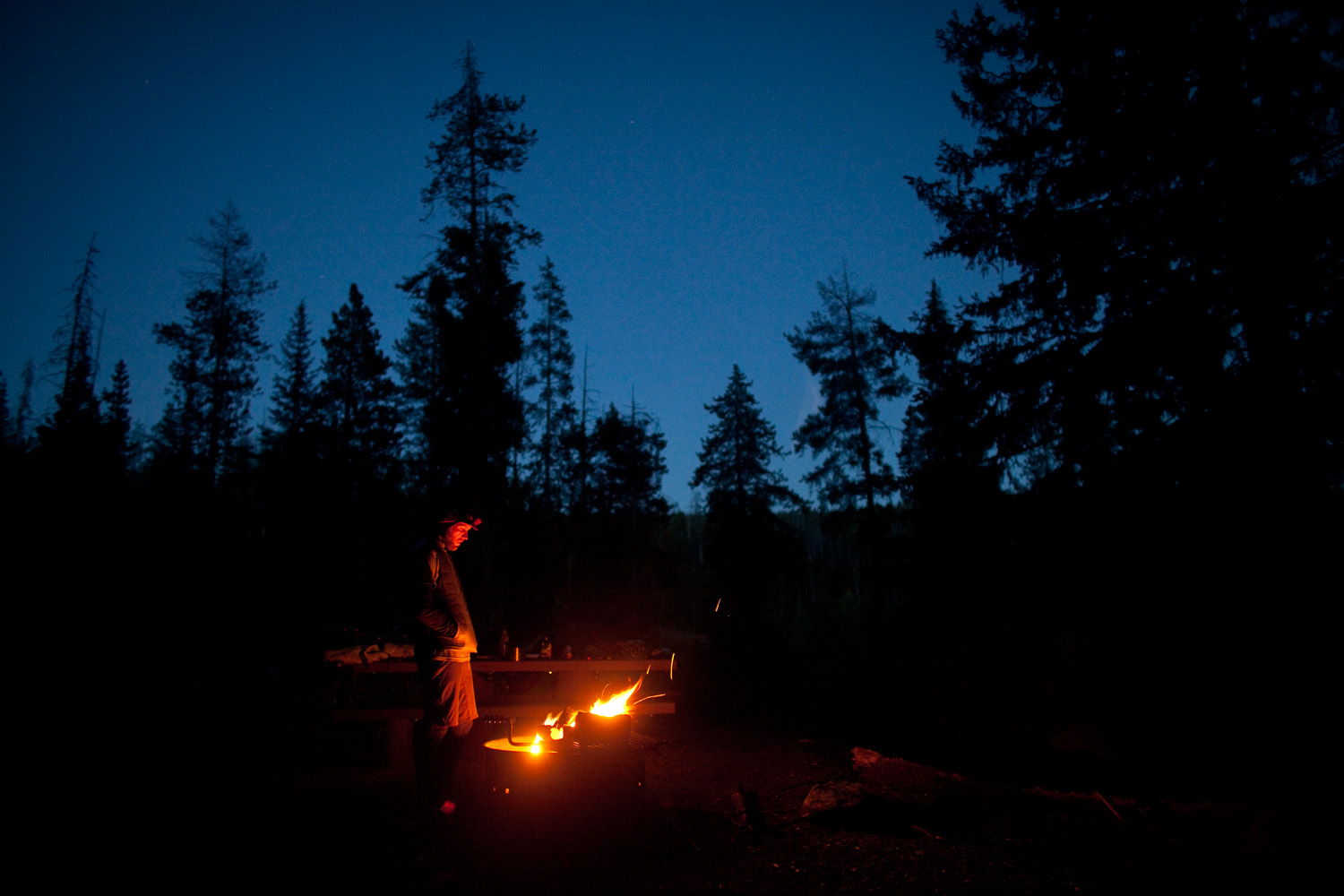
However unlike gas stoves, the Solo Stove did need to be tended. While this may seem like a hassle on paper, there was something soothing and meditative about feeding the fire. It was not only fun, but also something to look forward to doing after a long day on the trail. We were also able to use the embers from the stove to help start a larger campfire after dinner, which was clutch on many cold and damp nights.

In the end, the Stove ended up working perfectly throughout the trip. There was never a worry that we wouldn’t be eating a hot and delicious meal after riding our bikes all day. The Solo Stove is awesome and will always be in our bike-camping bags.